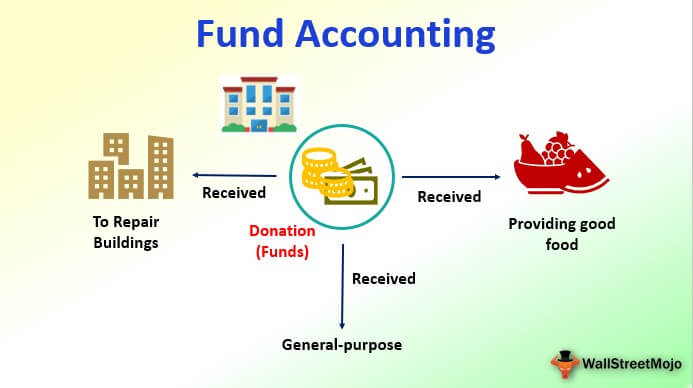
During my time helping churches with administration and record keeping, I have discovered that a great many churches do not properly understand designated funds and often times use them in a way that is harmful to the church.
So, I would like to help explain what designated funds are and how to use them in a way that benefits the church and is consistent with proper accounting methods for non-profit organizations.
A little history may be helpful here. Years ago, non-profits would list their total assets on a balance sheet. The problem was that while the total was accurate, it did not tell that some of that money was restricted in use, giving a false sense of the actual financial condition of the company. So, in 2008, the Financial Accounting Standards Board (FASB) issued a Financial Accounting Standard 117 that required a non-profit’s net assets to be reported as Unrestricted, Temporarily Restricted, or Permanently Restricted. In addition, the Restriction was to be identified as Donor Restricted or Board Restricted. Let me explain.
An unrestricted asset is an asset (usually cash) that can be used for any purpose. This is generally the gifts received by a church and used for paying the payroll salaries, program, and operating expenses of the church.
A temporary restricted asset is one that is restricted to a particular use over a period of time. A church example might be a Building Fund. Think of this fund as a cash bucket that is used to accumulate funds for a future use of a new building, major repairs or additions. When the new building or addition is completed, and the money is used, the fund is closed.
An example of a Permanently Restricted Asset would be an Endowment or Bequest, or other major donation that may never be spent, but invested and only the income may be used. That income may in turn be unrestricted or temporarily restricted for a particular use.
So, to sum up, there are three main types of funds:
Unrestricted
Temporarily Restricted
Permanently Restricted
Unrestricted – these are funds that are not restricted in their use. There may be different kinds of unrestricted, we’ll show a couple of types.
- General Fund – This is the cash fund that is used to operate the daily activities of the church.
- This includes the income from giving, income from building use and rental, interest and dividend income, and other types of fundraising that goes to operate the church.
- The general fund also includes the following types of expenses:
- Apportionments and Conference benevolence giving.
- Pastor, other clergy, and staff salaries and benefits.
- Program expenses for worship, education, fellowship, missions, and outreach.
- Operating expenses such as utilities, office expenses, advertising, insurance, building repairs and maintenance, cleaning, and other expenses that support the ministries of the church.
- Debt Repayment – mortgage principal and interest or other debt of the church.
- Capital Expenditures – Expenses incurred for major repairs and improvements, equipment, and similar items that are not paid out of the Restricted Funds.
- Unrestricted Memorials – gifts given in honor or memory of someone which are undesignated and may be used by the church as directed by the governing body (church council).
Temporary Restricted – These are funds that are temporarily restricted to a specific purpose and can only be used for that purpose once accepted. Because of that, they should be used sparingly and only for uses that are not already covered under the general fund. Do not make expenses that are part of the general fund a separate restricted fund!
- Capital Fund – This fund is used to accumulate cash for a major capital expense that is too large for general repairs and maintenance. Examples might include a new building or addition, new roof, new flooring or windows, other expenditures that would add value to the overall building.
- United Methodist Missions Fund– this fund is used to accumulate giving for items like Special Sunday offerings like UMCOR, One Great Hour of Sharing, as well as SC Conference benevolences such as Epworth Children’s Home. The idea is to accumulate the offering in one place and then send to the Conference or directly to the mission. The Discipline requires that such funds be sent within thirty days.
- Local Missions Fund – This fund is similar to above but is used for local or other non-UMC missions.
- Pastor’s Benevolent Fund – this fund is used to accumulate cash for the church or pastor to use to assist individuals or families as determined by the pastor or church policy.
- Memorials – this fund is for small gifts given in honor or memory of a person and restricted to a specific use. Care should be taken to ensure that the use is helpful to the church.
- Other Restricted Funds – these might include funds for UMM, UM Youth, and other groups in the church that could use a cash bucket for use in their ministries.
Permanently Restricted Funds – These are funds that are permanently restricted in their use. Such funds typically are major gifts, bequests, and memorials given is such a way that the gift itself may never be spent, only the income produced by the gift may be spent. The income may be unrestricted or temporarily restricted, depending on the wishes of the donor church governing body.
- Memorial/Endowment Fund – this gift itself is invested. Only the income produced may be spent.
Notice that restricted funds are typically used as passthrough funds for collecting cash that will eventually be given elswehre.
NOTE: a mistake that many churches make is creating restricted funds for everyday expenses of the church. Here are some examples of funds that end up restricting use in such a way that it actually harms the church and its ability to function rather than help.
- Worship Fund
- Education fund
- Usher’s fund
- Trustee’s fund
- Children’s fund
These are often set up to ensure that the ministry has the money to operate. This becomes a problem when the church can’t pay apportionments or the pastor’s salary and wants to borrow from these other funds. The Discipline prohibits reclassifying restricted funds to unrestricted unless the donors give their permission to make that reclassification.
What should be done is prepare a budget that provides the needed money for the ministries but allows the fixed costs of the church adequate funding as well. Great care should be used in setting up restricted or designated funds or accounts.
I hope this is helpful. For more information on the proper use of designated or restricted funds or accounts, see the Church Financial Records Handbook.
 Basic Church Administration
If funds are collected for future building of a church, can those dedicated funds be voted by Session to be used for operating expenses.
LikeLike
It depends on the care in setting up the fund. If in its inception it is clearly stated that the Session has the authority to do that at a later date. Since you use the word “Session,” I assume you are Presbyterian. You may need to refer to your denomination’s book of law.
LikeLike
we held a fundraiser to send our youth to various summer camps. Are there any regulations that prohibit the funds to be transferred to the parents so that payments can be made? Do the funds have to be directly paid to the camp from the church?
LikeLike
Totally up to the church and their financial policies. May want to have the parents give the church receipts or copies of payments to ensure the funds were use as intended.
LikeLike